Category Archives: Uncategorized

Brainiverse 2023

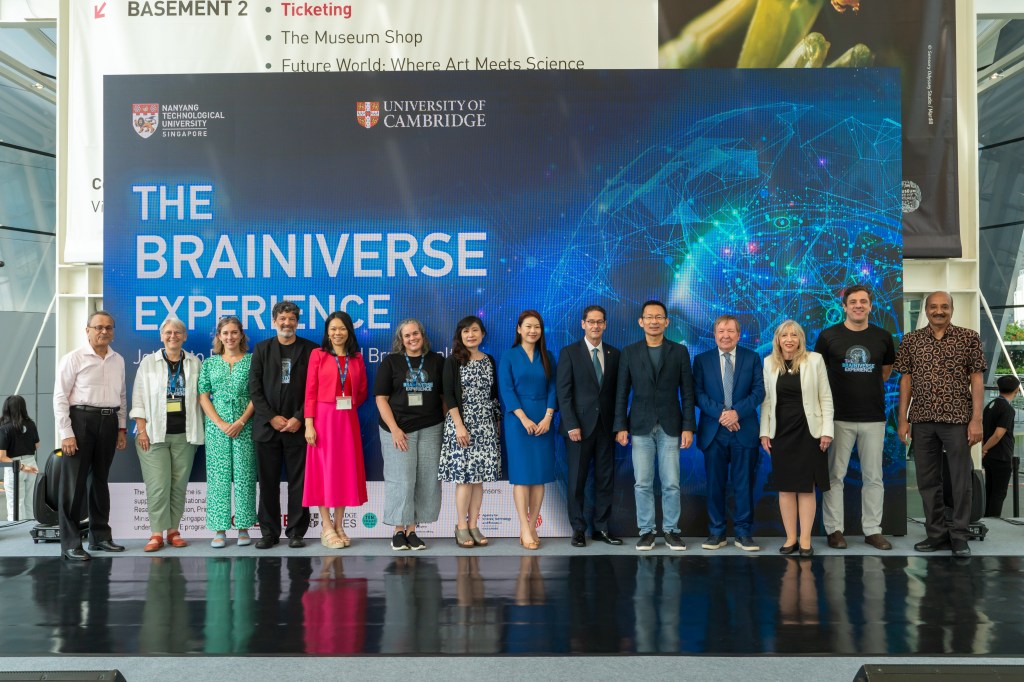
CLIC PIs, Co-PIs, A/Prof Georgios pictured 2nd from the left, Prof Henriette pictured 2nd from the right.

The DEON Lab took part in the inaugural Brainiverse event in August 2023 at Marina Bay Sands (MBS) Digital Light Canvas and Artscience Museum. Over the course of several days, we had the opportunity to communicate insights from our research to both the general public and to policymakers.

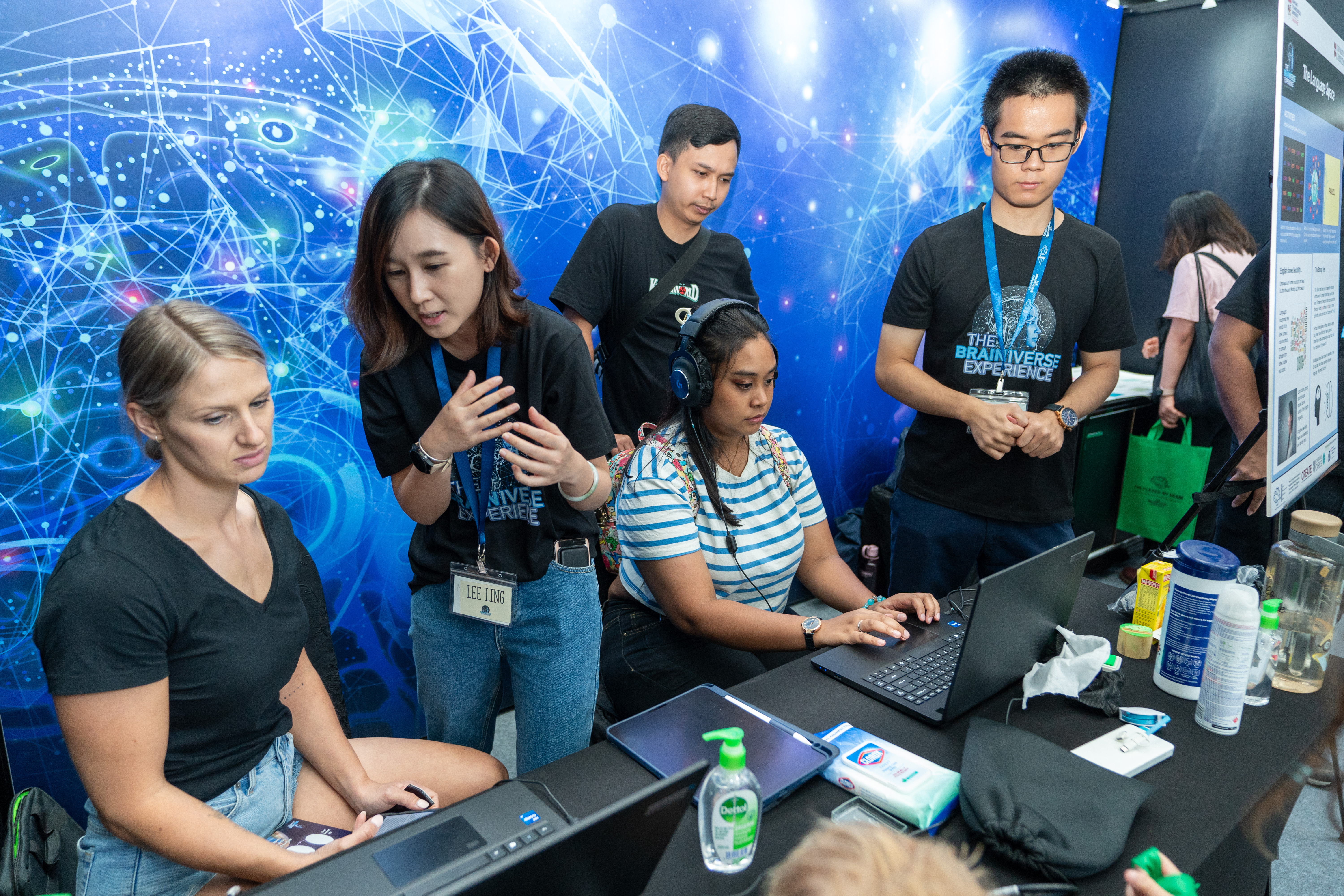
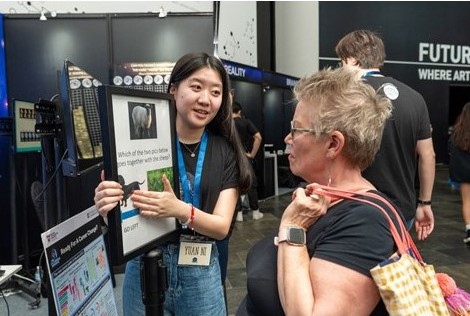
Amongst exciting public events such as the Brainiverse Challenge and dance performances, highlights from our lab include the gameshow “Brain Games: You, Yourself and Your Brain” hosted by Professor Georgios and our two booths, “Decision Den” and “Language Space”. Prof Georgios’s gameshow included a “Steps Game”, which engaged the audience by providing first-hand decision-making problems for participants to navigate. The Decision Den demonstrated decision-making processes by immersing participants in mind-boggling choice tasks. In Singapore’s vibrant multilingual culture, the Language Space booth proved to be popular. Attendees were introduced to the origins of language and explored different dialects in thrilling time-pressure games.
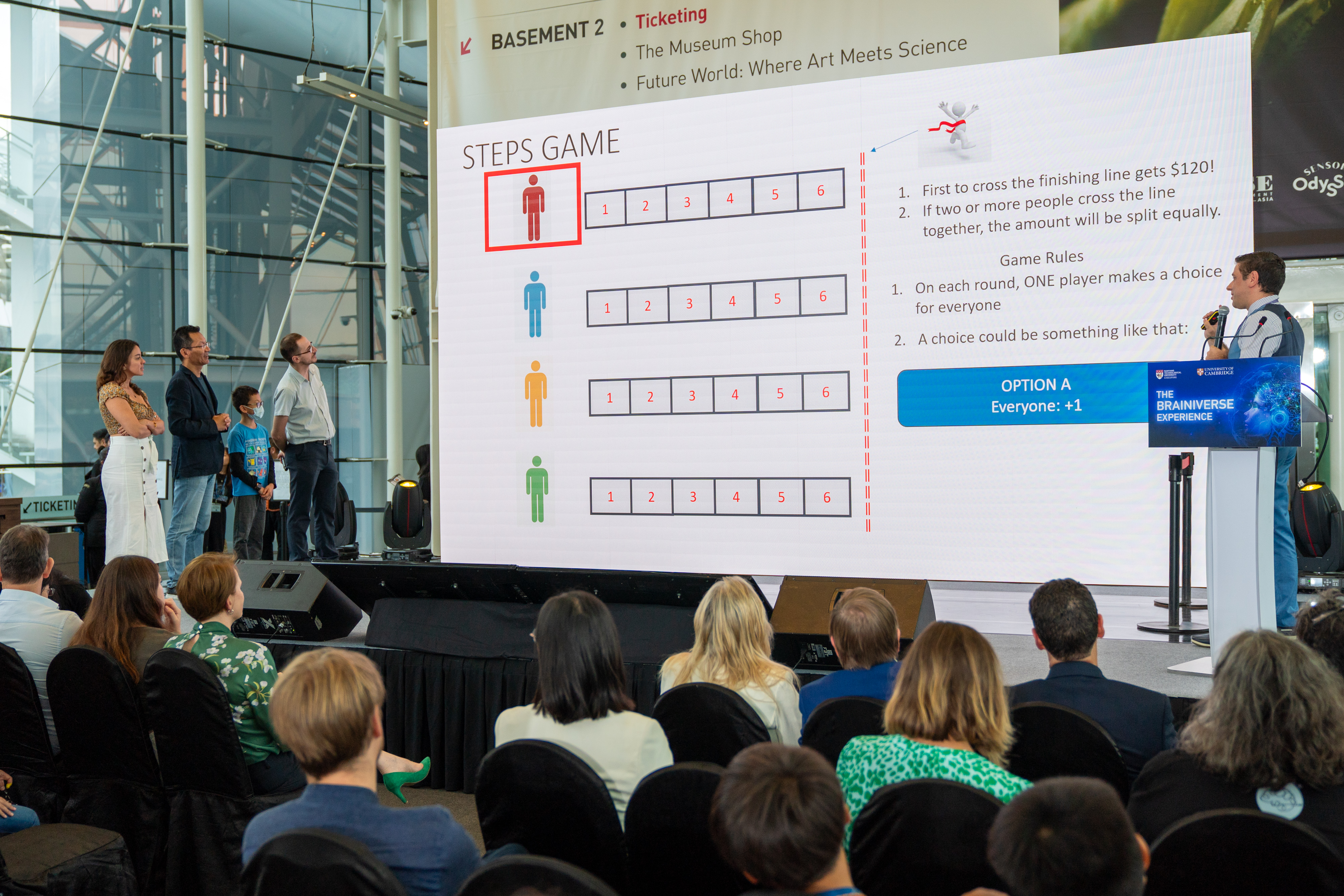
Top left: A/Prof Georgios’s Step Game during his gameshow
Top right: Research assistants Yuan Ni (top) and Hui Shan (bottom) interacting with attendees at the Decision Den booth
Bottom left: Attendees trying out the Language Space activity
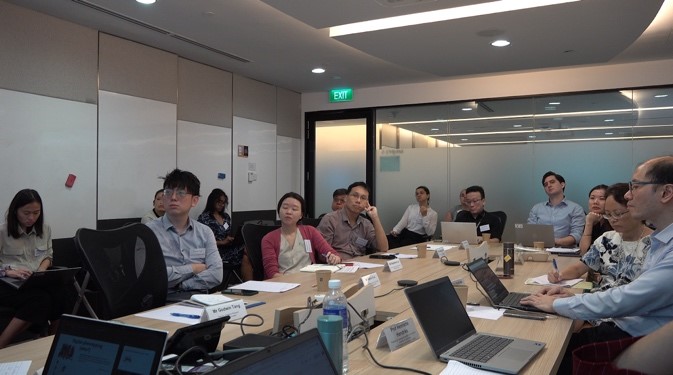
Bottom right: Attendees at A/Prof Georgios and Professor Henriette’s workshop

Beyond communicating our research insights to the public, we also got the chance to present our research to government agency stakeholders during. A/Prof Georgios and Professor Henriette addressed increasingly relevant issues such as the responsible adoption of AI, interactive technology, empathetic technology, and personalised learning. We hope to continue to shape education and cognitive wellbeing policies in Singapore through our research.

This event demonstrated our lab’s dedication to science communication and the importance of applying behavioural science research to policy work. Thank you for your participation, and we look forward to seeing you at our next event! For those who weren’t able to make it, catch some of the talks on the NTU-CLIC facebook page.
PSY-VR System: How to install and use

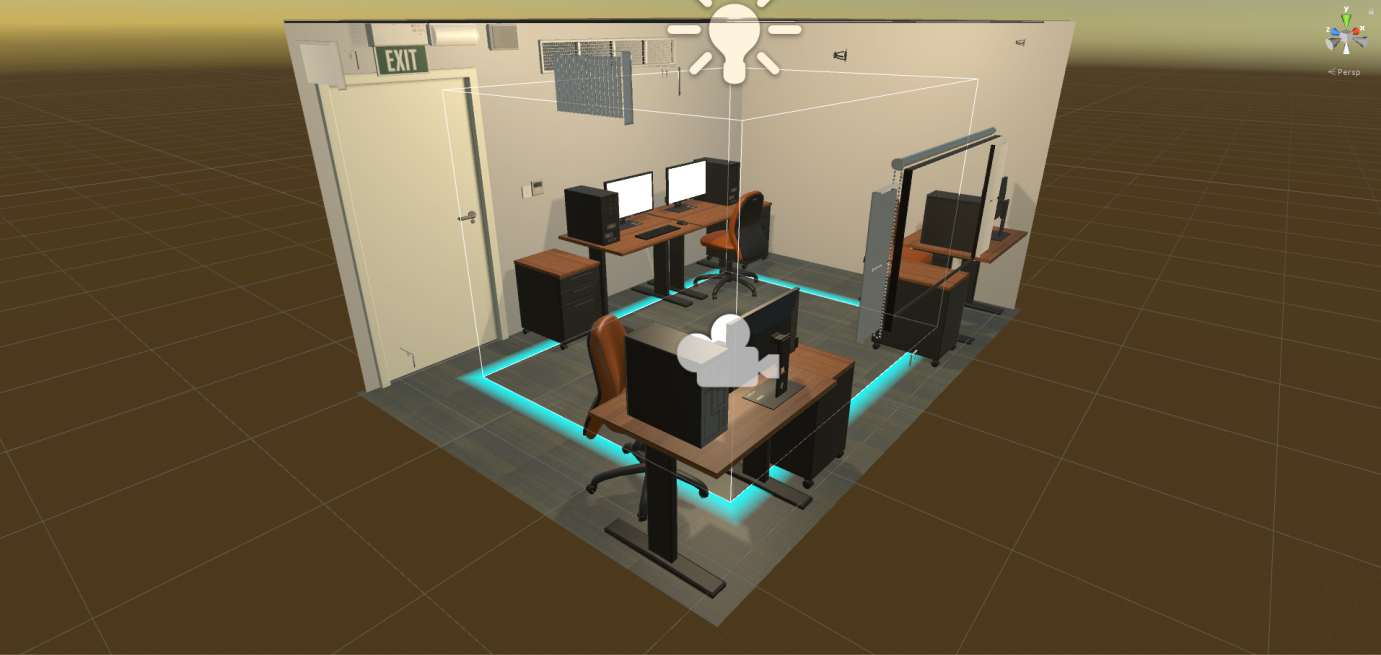
The PSY-VR suite is a Virtual Reality system that allows formal psychological testing (computer-based testing) in VR environment. One fo teh advantages is that the user (psychologist) does not need to have special VR s/w skills to set up the system. The PSY-VR is also very flexible and allows manipulations of the environment in terms of office size, colors etc. PSY-VR records responses and reaction times, as in traditional experimental testing. For a description see here

VR

Finally, PSY-VR is open source and thus, if you have the skills, you can improve it. If you do so, please let us know and we will be happy to include your version here. In the spirit of open science and open software, we except PSY-VR to organically grow by the community. We make this free for eevryone and we hope better versions will be free for the academic community.

The PSY-VR prescribes two roles: the role of a USER(S) (i.e. the researcher / psychologist) who sets up the experiment; and the role of a PARTICIPANT(S) (i.e. people that do the experiment). The instructions are for the USER to set up the experiment

If you want  to use PSY-VR in a commercial setting please contact us at georchris7@gmail.com

Instructions: PSY-VR Instructions

To send you the code and/or if you have questions, please fill in the following form. By signing this form you are acknowledging the following:

ALL SOFTWARE IS PROVIDED “AS IS”, WITHOUT WARRANTY OF ANY KIND, EXPRESS OR IMPLIED, INCLUDING BUT NOT LIMITED TO THE WARRANTIES OF MERCHANTABILITY, FITNESS FOR A PARTICULAR PURPOSE AND NONINFRINGEMENT. IN NO EVENT SHALL THE AUTHORS OR COPYRIGHT HOLDERS BE LIABLE FOR ANY CLAIM, DAMAGES OR OTHER LIABILITY, WHETHER IN AN ACTION OF CONTRACT, TORT OR OTHERWISE, ARISING FROM, OUT OF OR IN CONNECTION WITH THE SOFTWARE OR THE USE OR OTHER DEALINGS IN THE SOFTWARE.

Go back

Your message has been sent

Warning
Warning
Warning

Warning.

Attitudes towards Underground Spaces

In this paper (soon to appear in Building and Environment – a major journal of Urban Sciences) we examine the structure of attitudes towards the possibility of having an underground working space. The paper suggests that there is a positive dimension and two negative dimensions across which the average person will evaluate the possibility of an underground office. In short, an underground office will be acceptable provided some key criteria are satisfied – and our questionnaire offers a standardized way to “measure” these attitudes. Interestingly, the negative dimensions are correlated but independent constructs of claustrophobia – this means that attitudes towards UG workspaces could be positive independently of the claustrophobia that a sub-population has.

Temporary Link: https://www.sciencedirect.com/science/article/pii/S036013231930112X?via%3Dihub

Abstract

Over half of the global population lives in urban areas, making the issue of space a pressing environmental factor. The development of large-scale underground complexes in (mega-)cities is a solution to healthy urban growth and many governments have already adopted the development of underground (office) workspaces (UWS). Engineering can develop such high quality spaces; yet, there is limited understanding of how the public perceives UWS. UWS are not the same as other workspaces, and thus special assessment tools are needed. Here, we present the Underground Workspaces Questionnaire (UWSQ), which measures pre-occupant attitudes towards UWS. Analysis (N = 1080) identified three factors with positive aspects associated with feeling protected, whereas confinement was independent of affective responses. Predictably, responses to the three factors correlated with claustrophobia but were independent constructs. UWSQ can help policymakers and architects understand how populations holistically respond to the idea of working in an underground office.